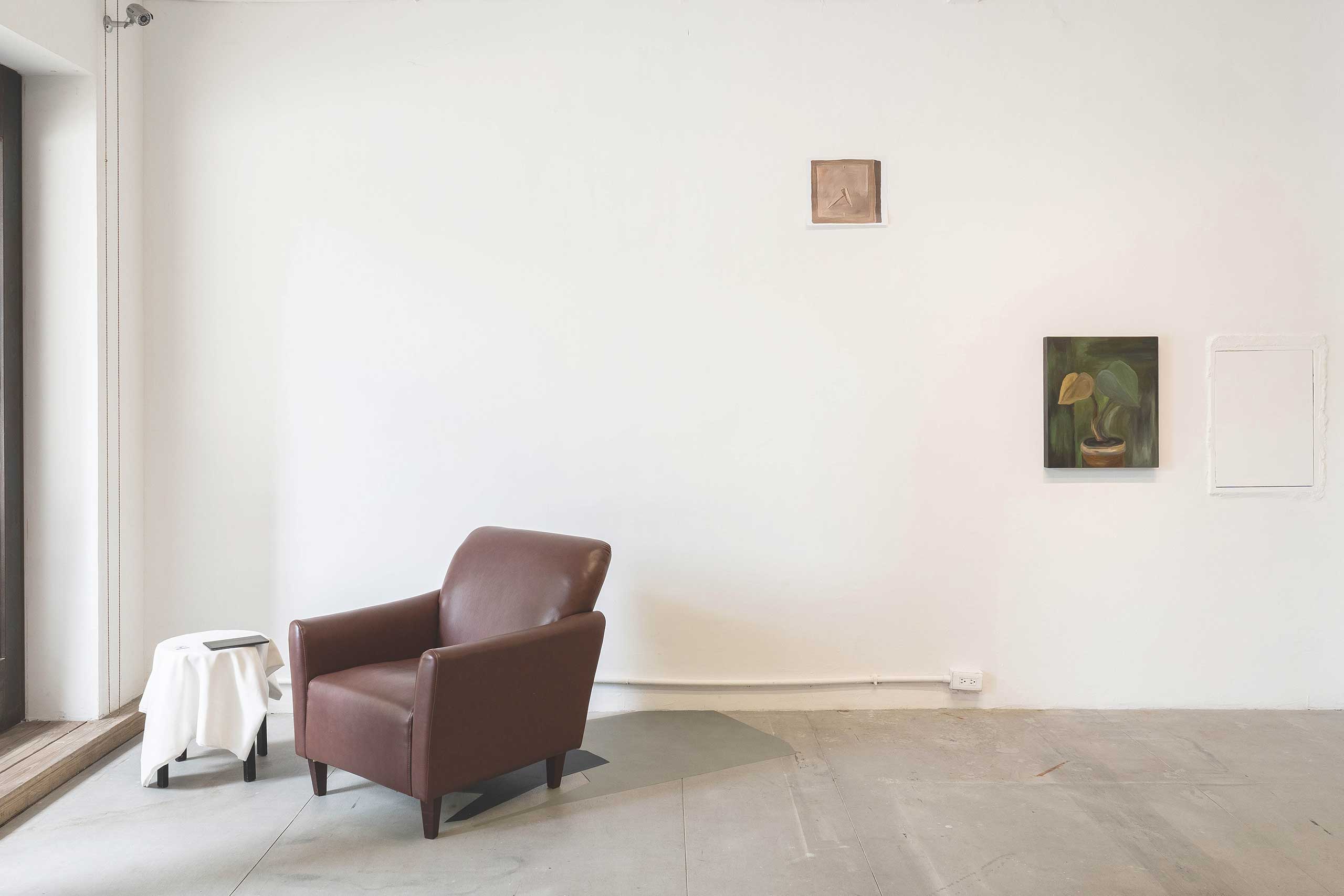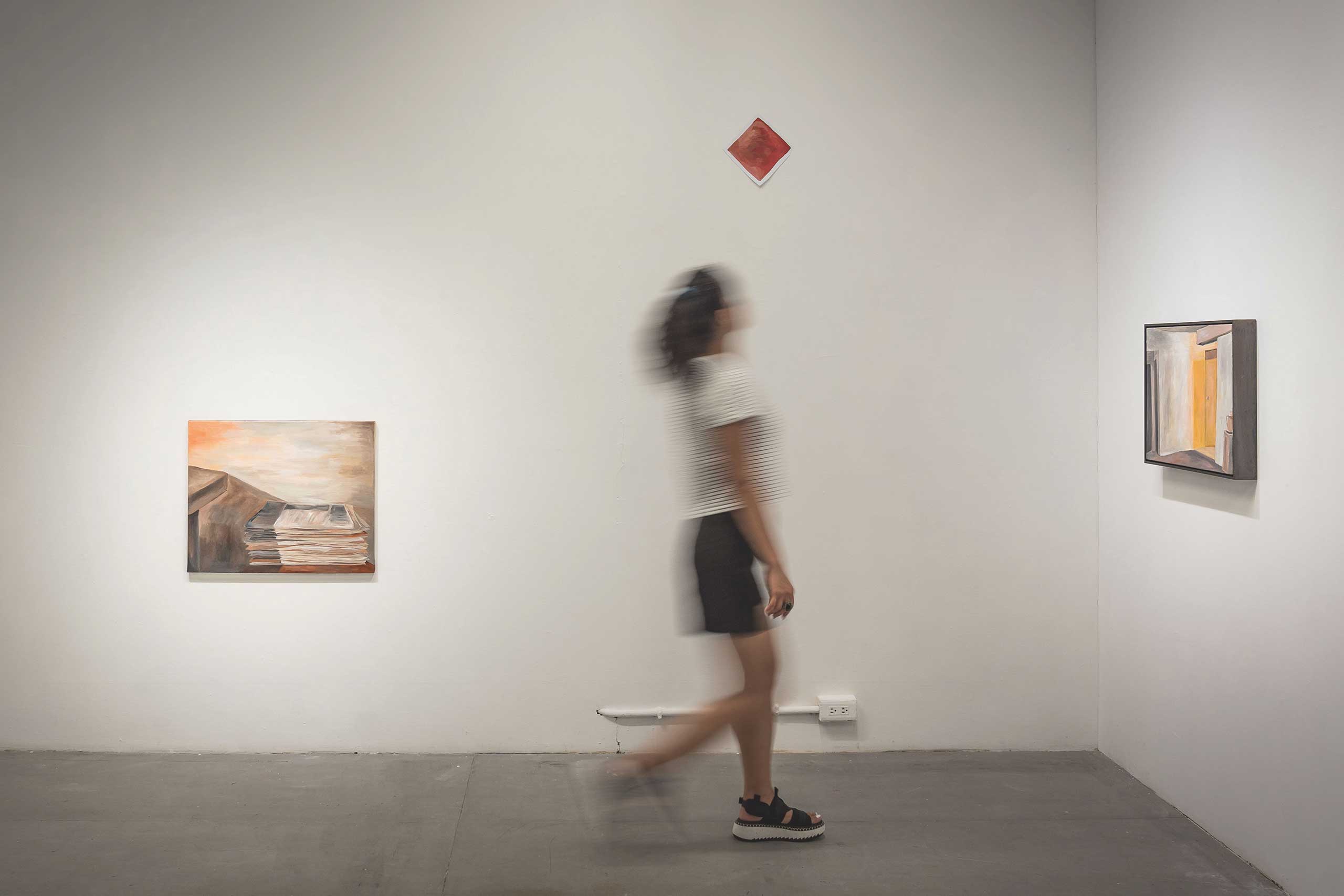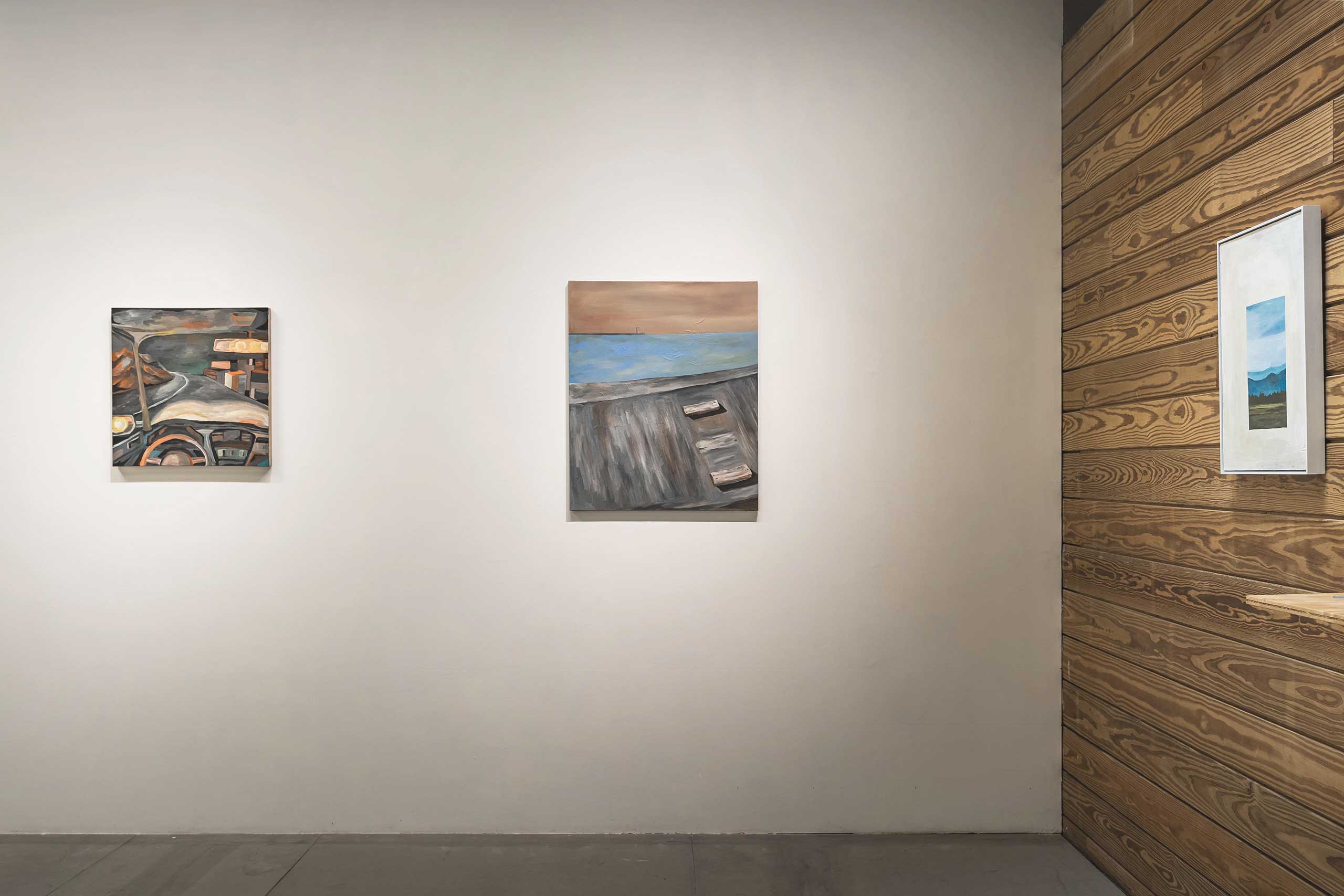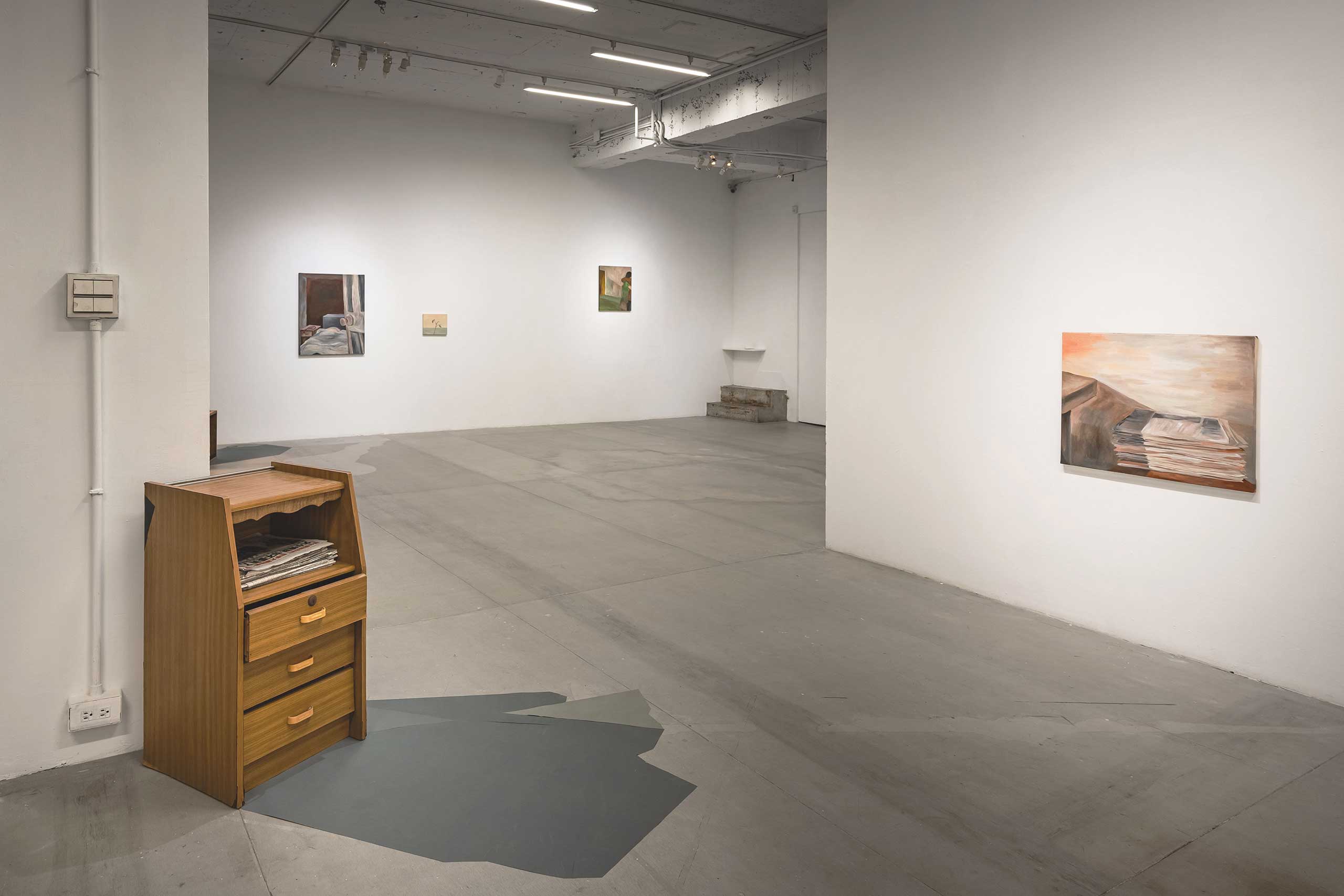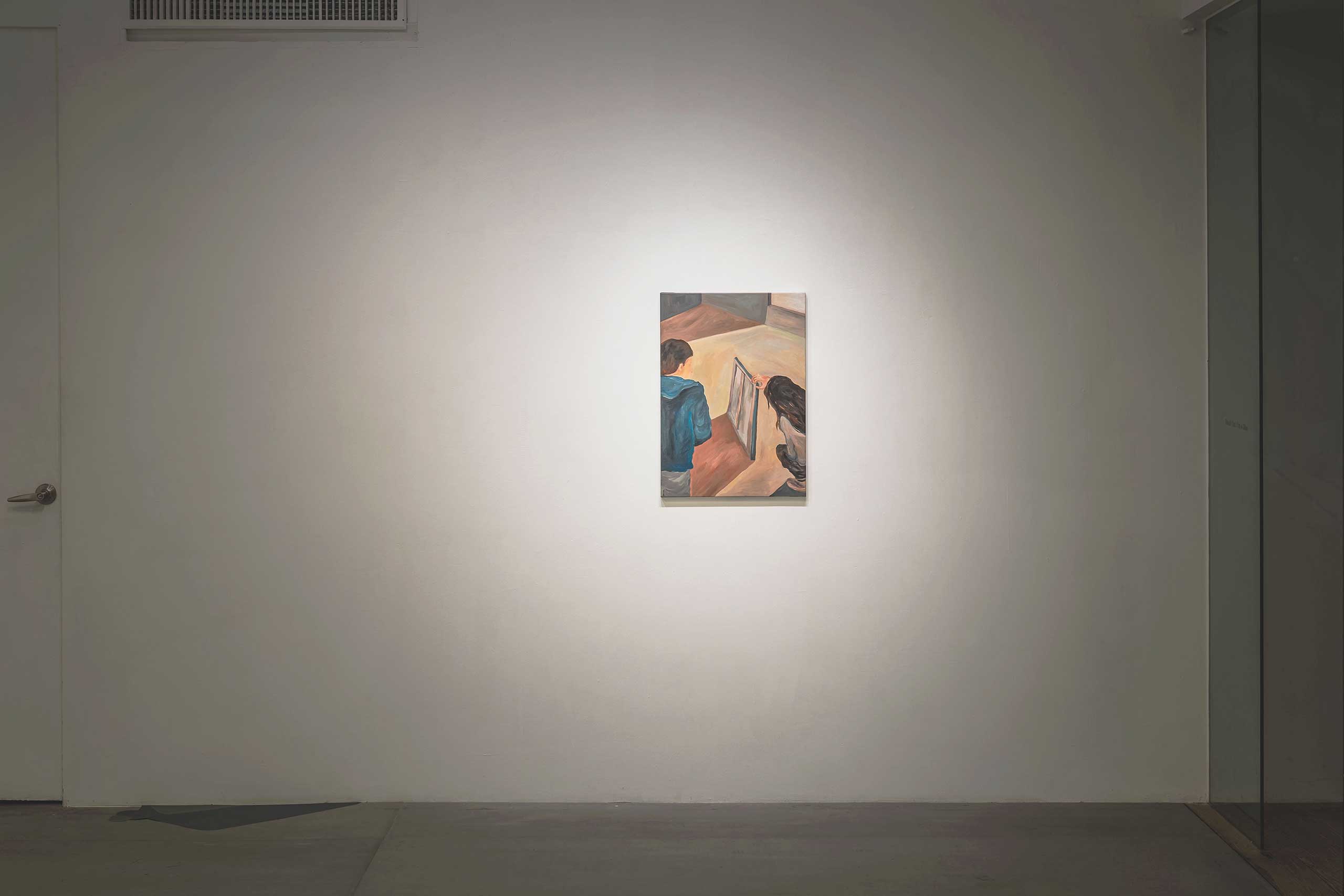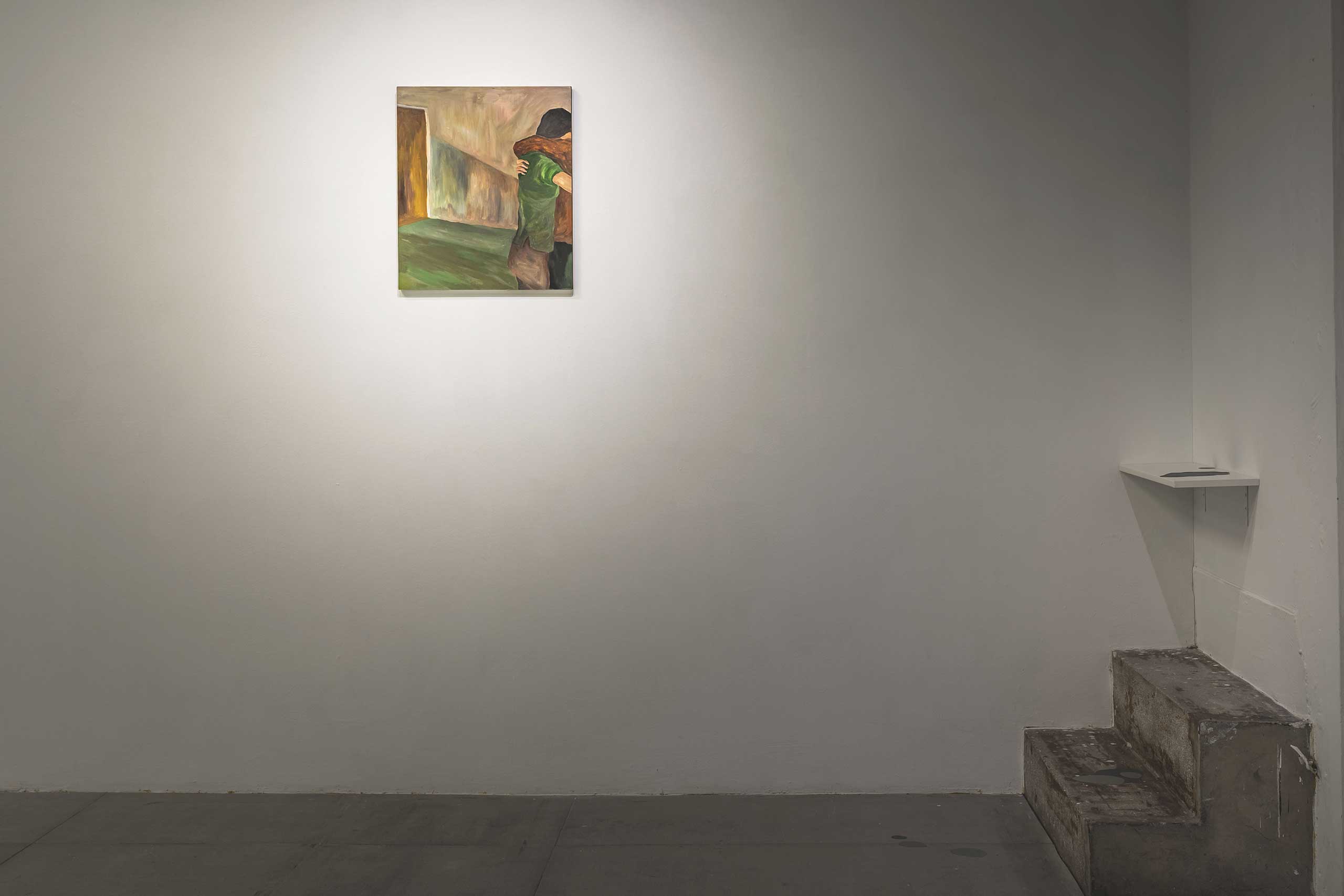
Objects and paintings, 2023.
Candy Bird: there, there.
By Hsu Fong-Ray
“…Scenes of landscape flash by. He doesn’t miss a thing, yet misses everything. While his eyes are transfixed on the view, he is trapped inside the bus. He keeps waiting for his final destination, but never manages to get off.”—“Slow Bus”, City Blues, Lolita Hu
Following his 2018 solo exhibition What a Neat Painting, Candy Bird decided to step away from graffiti. He took an office job and embraced the life of a salaryman—a unique turn for an artist who had spent years making art in the city’s hidden corners. This transition forced him to confront the pragmatic realities and compromises of the societal mechanism we so often critique. Though we might view this change with a touch of irony, the experience deeply left its mark. These mundane realities filter into our memory, operating in familiar ways—like faint morning light on curtains or a stack of second-hand clothes. They evoke a strange yet familiar sense of time and space, leaving us feeling subtly lost even as we walk our usual daily routes.
In his 2022 exhibition Moon/Moon, this exhaustion from confronting reality becomes visible through scenes of wandering car rides juxtaposed with everyday furniture scattered at the bottom of a ramp. The city alleys and ruins he once knew well are no longer just social issues to critique. Graffiti remains in the external world as a witness to urban memory, but it cannot stop the city’s progression or the passage of time. While Candy Bird once stood on the streets witnessing the transformation of the city, he now finds himself observing his own transformation within it.
To Candy Bird, graffiti and canvas are merely different tools for expression; his shift from city walls to stretched canvases represents a change in what he gazes upon. In the exhibition there, there., his iconic figures with wrinkled faces disappear into heavy tones and faint light, resisting the consumption of mere artistic symbols. He extends his images beyond the frames into the white cube, creating a sense of psychological repression. A video tucked away in a corner offers a quiet respite from the main narrative. This world may lack definitive truths, but life undeniably goes on, even if city dwellers often prefer living in comfortable illusions rather than confronting reality.
Why does Candy Bird forego his previous signature style? Must he reject his past self to attain peace in a consumerist environment? While self-erasure does not shake reality, it allows him to maintain his creative freedom. The art market rarely embraces a transitional phase, yet it is a vital juncture in artistic creation. An exhibition does not always need to deliver a definitive interpretation of the world; sometimes it simply states, “Neither do we understand this world,” creating a connection through shared uncertainty.
Modern society is like a congested road where we are trapped in our individual cars, waiting for traffic lights while gazing at the endless road ahead. We may travel the same route, but we are isolated in separate vehicles, fully aware of the outside world’s complexity. Ultimately, we connect these scattered, fragmented life experiences—much like a cinematic montage—to piece together our own stories.
「……風景在窗外閃過。他什麼也沒錯過,卻也錯過了一切。當他的目光被眼前的景色所吸引,他已被困在公車內。他不斷等待終點站的到來,卻始終未能下車。」——胡蘿莉,〈慢車〉,《城市藍調》
在 2018 年個展之後,Candy Bird萌生了暫時放下塗鴉的想法。不久後,他進入辦公室成為上班族——這對於多年來在城市角落漫遊創作的畫家來說,是一段獨特的經歷。這個轉變迫使他直面我們常批判的社會機制中,那些務實的現實與妥協。這段經歷留下了深刻的印記,平庸的現實滲入記憶,並以熟悉的方式運作——就像清晨照在窗簾上的微光,或二手店裡堆疊的舊衣。它們喚起一種陌生卻又極其熟悉的時空感,甚至當走在日常熟悉的路線上時,總會隱約感到迷失。
在 2022 年展覽《Moon/Moon》中,這種面對現實的疲憊感變得清晰:漫無目的的開車漫遊景致,與散落在斜坡底部的日常家具並置。他曾如此熟悉的城市巷弄與廢墟,已不再只是用來批判的社會議題。街頭塗鴉見證著城市的記憶,卻無法阻止城市的推進與時間的流逝。過去,糖果鳥站在街頭見證城市的轉變;現在,他發現自己正在觀察自身在城市內部的轉變。
對糖果鳥而言,街頭塗鴉與畫布只是不同的創作工具,創作本身才是表達的媒介;從城市牆面走向繃雙畫布,代表著他凝視對象的轉變。在展覽《there, there.》中,那些面部帶著皺紋、逐漸消失在畫面中的標誌性人物,隱沒在沉重的色調與微光中,以此抵抗符號化的消費。他將畫框內的影像延伸至白盒子空間(White Cube)中,營造出一種心理上的壓抑感。而放置在展場角落的錄像作品,則在作品的敘事之外,提供了一個安靜喘息的空間。這個世界或許缺乏絕對的真理,但無庸置疑的事實是生活仍在繼續,即便城市居民往往寧可生活在舒適的謊言中,也不願面對現實。
為什麼藝術家要放棄過往具代表性的創作特徵?在消費主義環境中,他是否必須否定過去的自己才能獲得平靜?儘管自我抹除無法撼動現實分毫,卻能讓他保有創作的自由。藝術市場鮮少包容處於「過渡期」的作品,然而這卻是藝術創作中至關重要的臨界點。展覽並不總是旨在向觀眾傳達某種特定的世界詮釋;有時它只是簡單地說:「我們也同樣不理解這個世界」,透過共享彼此的不確定性來建立連結。
現代社會就像一條擁堵的道路,我們被困在各自的汽車裡,在凝視前方無盡道路的同時耐心地等待紅綠燈。我們或許行駛在相同的路線上,但畢竟不是坐在同一輛車裡,對於外部世界的複雜性並非一無所知。正因對此瞭然於心,我們最終將這些碎片化、如同電影蒙太奇鏡頭般的生命經驗串聯起來,拼湊成屬於自己的故事。